|
INTRODUCTION:
The loss of a tooth is a traumatic experience.
Whether equal cases peridon or trauma with the immediate implant dentistry in technology and technique have come with An increasing patient awareness which has also meant that more and more patients want to seek implant dentistry as an option and growing marketing in the virtual space has resulted in many wanting immediate results as well. But as clinicians we are aware that edentulous patients do not come in standard packages and that we must address the clinical variables that are unique to each case before making a decision to bypass the normal implant restorative timeframes. Immediate implant dentistry ranges from immediate implant placement to non functional loading and progressive loading to complete function.
A clinical decision in this regard is often hard to make and if you do have to err. , I strongly recommend that you do so on the side of safety. When
in doubt, opting to remain with conventional implant protocols is by far the best clinical decision. No patient can be a scientific experiment and we are
ethically bound to help the patient make decisions that are in line with current scientific knowledge. Equally, if patient is unwilling to comply with the advice and chooses to opt for a risk that he fully comprehends, then that is also a choice that has to be respected.
There are various levels at which immediate intervention with implant dentistry may be considered and these are outlined below.
Immediate post extraction implant placement is very simply, the placement of an implant into a fresh extraction socket. It may or may not be
accompanied by augmentative procedures. The approach to the restoration of this implant then throws up three possibilities, one option is to load
this implant conventionally after osseo-integration has taken place (delayed loading), the second option is to load it with in two weeks with a restoration that is not under the impact of direct occlusal load (progressive loading). Alternatively you may choose to load this implant within 48 hours, a procedure referred to as immediate loading.
Of course, you may choose not to place an implant immediately after extraction at all and you may opt to place it after complete bone healing.
At that point, you would again choose between the same options of immediate loading.
The criteria that drive a decision of choice between the various protocols above are vastly varied. More often than not, the decision is case based and
may even be affected by the individual operator's skill level and experience.
The choice of immediate post Extraction Implant placement
Immediate implant placement after extraction has become a favoured treatment protocol with many clinicians worldwide. There are many
advantages to this protocol, amongst them; shortened treatment time, placement of the implant in sound bundle bone that constitutes the socket
wall, placement trajectory guidance by the socket and preservation of bone volume. A decision to place an implant in a fresh extraction socket must
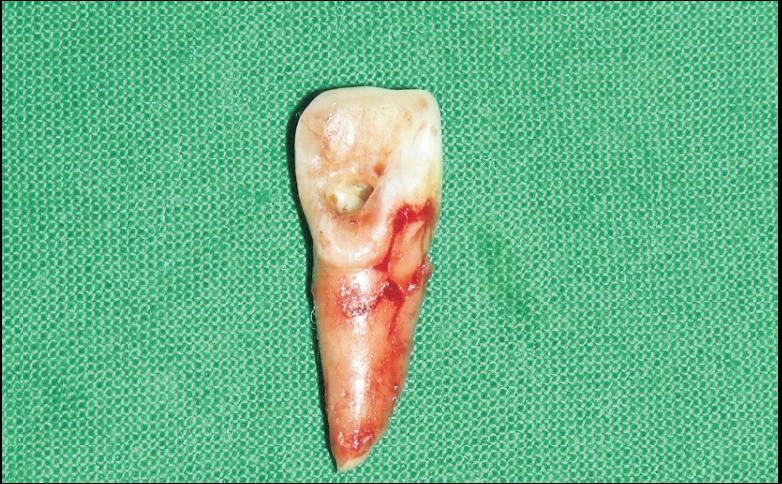
only be made if there is an absolute assurance of primary stability. An evaluation of the extracted root will often yield valuable information as to the length and diameter of the implant to be placed. Also important is an assessment of the trajectory of the socket-a malpositioned tooth would have a malposition trajectory often rendering the implant difficult to restore. The presence of infection might predispose the placed implant to failure and
it is hence important to evaluate why the tooth is been extracted in the first place. There is also evidence to suggest that use of the right implant
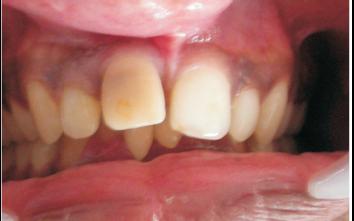
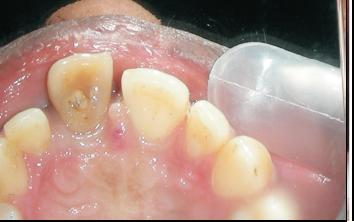
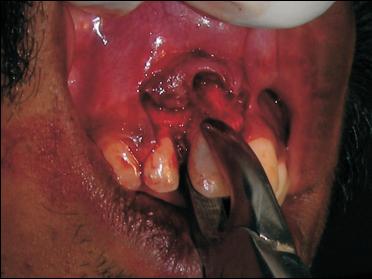
design is critical to success, tapered implants with rough surfaces may be more suitable. A simple case illustrated in Figure 1.
 |
|
 |
|
 |
|
 |
|
FIG 1.a: Preoperative labial view of tooth to be extracted |
|
FIG 1.b: Occlusal view of fracturedendodontically treated tooth |
|
FIG 1.c: Periotome assisted extraction for atraumatic technique |
|
FIG 1.d:Extracted tooth root measured for determening socket depth |
 |
|
 |
|
 |
|
 |
|
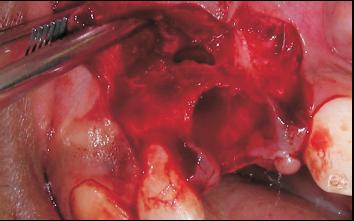
FIG 1.e:Post
extraction view showing minimal damage to
surrounding tissue also showing apical
dehiscence |
|
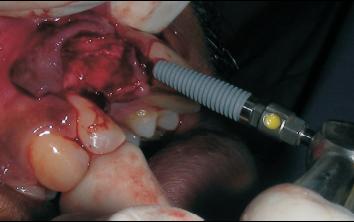
FIG 1.f:osteotomy, with deepening of extraction site & placement of implant Palatally repositioned |
|
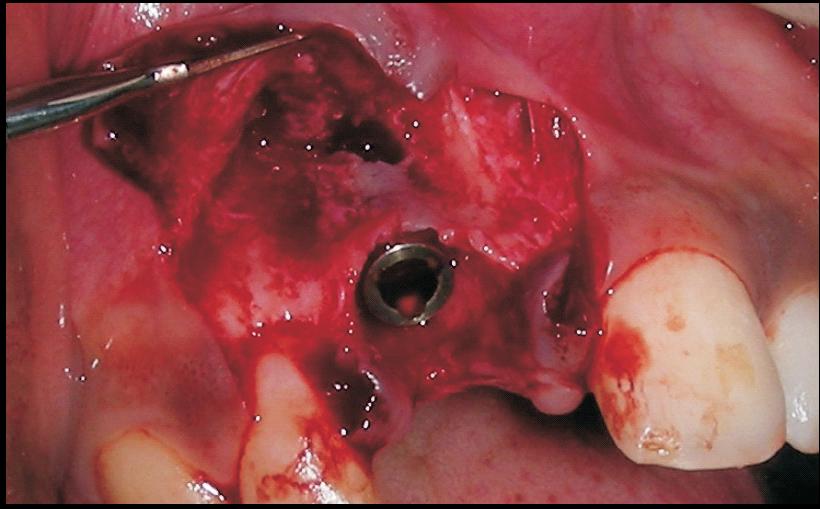
FIG 1.g:Placement of a tapered screw type implant placed and apaical dehiscence seen |
|
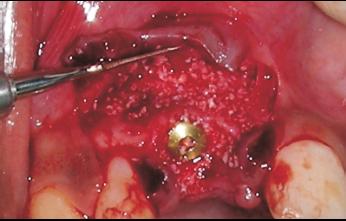
FIG 1.h:Autogenous
bone mixed with bios oss to fill up the
defect |
 |
|
 |
|
 |
|
 |
|
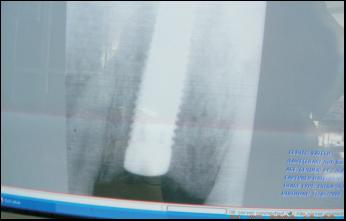
FIG 1.i:immediate post implant placement radiograph |
|
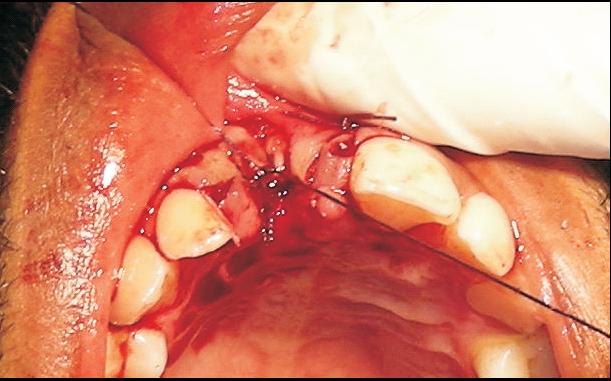
FIG 1.j:primary closure achived after covering the graft with collagen membrane |
|
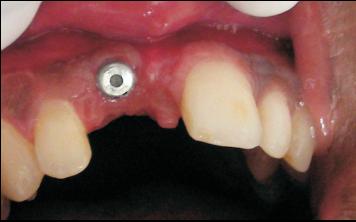
FIG 1.k:Healing abutment |
|
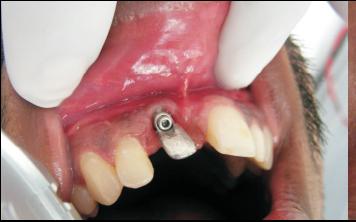
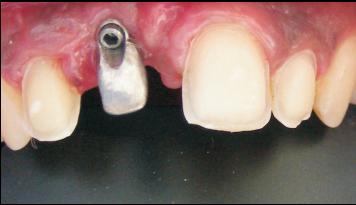
FIG 1.l:Customized abutment |
 |
|
 |
|
 |
|
 |
|
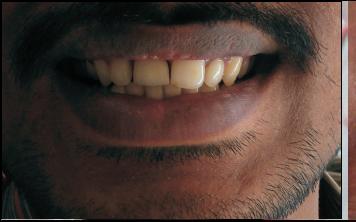
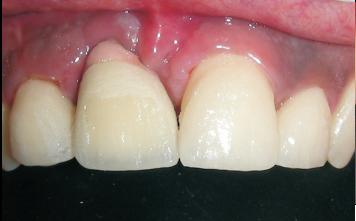
FIG 1.m : Final restoration trin |
|
FIG 1.n:Veneer preparation to close diastema |
|
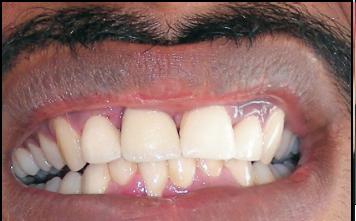
FIG 1.o:Final esthetic rehabitation |
|
FIG 1.q:Final restoration in patients natural smile. |
| The choice of delayed implant placement |
Delayed implant placement is still by far the mainstay of clinical implant dentistry. Not all edentulous situations present themselves to the
implant clinician for extraction or there are many reasons why immediate implant placement may not be opted for. Considerations in any delayed
implant placement situation would include all conventional implant placement criteria such as sufficiency of bone volume, restorability of the
situation and good bone quality. Disadvantages include the possibility of bone volume loss or density loss and the dependence of correct implant
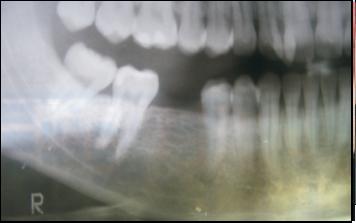
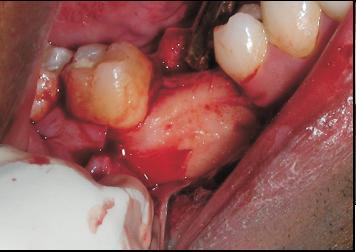
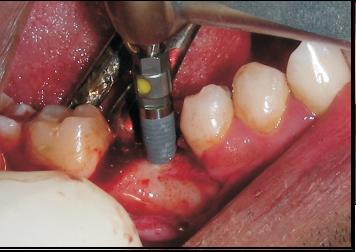
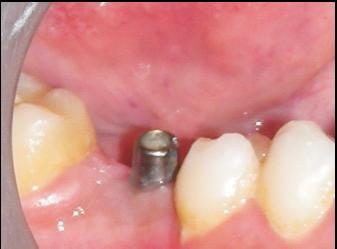
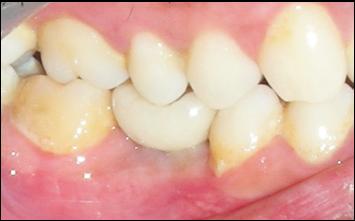
positioning on accurate treatment planning. Simple case illustrated in Figure 2 : |
 |
|
 |
|
 |
|
 |
|
FIG 2.a :Pre-ope
rative radiograph |
|
FIG 2.b :A full thickness flap |
|
FIG 2.c:Placement of Implant |
|
FIG 2.d:Straight Abutment |
 |
|
|
|
|
|
|
|
FIG 2.e :Final restoration in occlusion |
|
|
|
|
|
|
|
The choice of delayed placement and immediate /progressive load |
The decision to load immediately or progressively or delayed, is an altogether different one from the decision to place an implant immediately
after extraction. The degree of primary stability and the quality of bone are important factors. The design of an implant, if immediate loading is
desired, is a critical variable as well, as some designs lend themselves to much higher primary stability. An evaluation of the occlusion would also allow
some assessment of the kind of load the implant would be subject to and the experienced clinician would seek to assess this dynamically.. Recent
evidence has suggested that the use of resonance frequency analysis may also be a useful adjunct to the assessment of the primary stability by other,
methods. to load immediately or progressively in a delayed placement situation does involve an evaluation of all factors outlined in a section on
immediately/progressively loading an implant placed immediately post extraction. In addition, the use of a splinted prosthesis or the possibility of
providing cross arch splinting in multi unit situation. There is ample scientific evidence to suggest that certain rough surfaces in particular the
anodized titanium oxide surface, perform better than others in an immediate loading environment. The use of resonance frequency analysis is again
an useful adjunct as in the case of immediate loading in immediate post extraction,implant placement
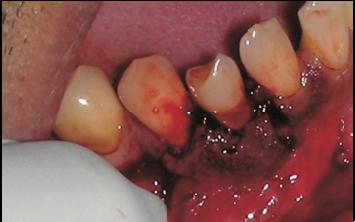
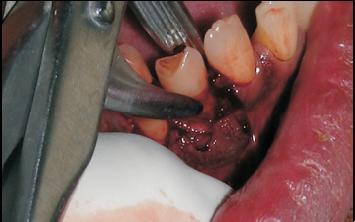
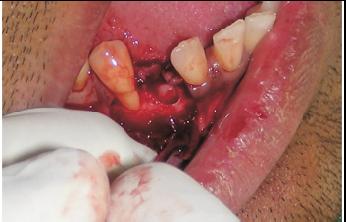
A case that involved immediate loading in an immediate post extraction implant placement situation is illustrated in
Figure 3. . |
 |
|
 |
|
 |
|
FIG 3.a :retained deciduous canine |
|
FIG 3.b :atraumatic extraction of deciduous canine |
|
FIG 3.c:extracted socket with minimal damage to surrounding tissue |
 |
|
 |
|
 |
|
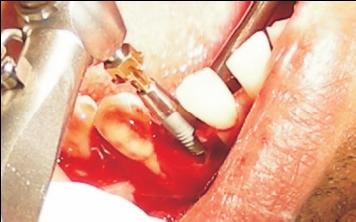
FIG 3.d :placement of one piece implant |
|
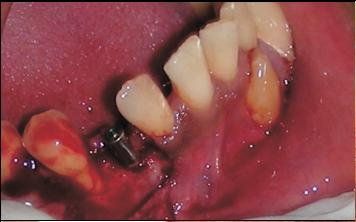
FIG 3.e :abutment of one piece implant left supra crestally |
|
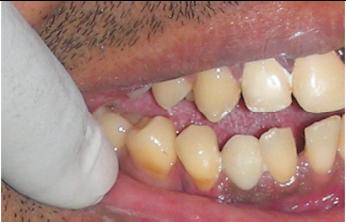
FIG 3.c :immediate provisional restoration out of Lateral Excursion |
|
|





